


🎯 IN BRIEF
- Many pianists use just one pedal without understanding the precise role of the three available on an acoustic piano.
- The loud Pedal extends the sounds by lifting all the dampers, creating a more generous and deep playing experience.
- The Soft pedal softens the sound by reducing the number of strings struck on a grand piano, with a different system on an Upright piano.
- The often overlooked tonal pedal allows you to hold certain notes while freely playing other melodies above.
When you sit down in front of an acoustic piano for the first time, you immediately notice these three pedals at the bottom of the instrument. Many beginners (and even some intermediate pianists) use only one of these pedals, often without really knowing what it does. And yet, each pedal has a very specific role to play in the world of piano sound.
In this article, we explore what these three pedals are for, from right to left, to understand how they influence the sound and open up a whole world of expressive nuances.
The forte pedal (right): extending sound and enriching harmony
Also known as the sustain pedal, it prolongs the sound of notes played.
How does the forte pedal work on an acoustic piano?
When you press this pedal, the dampers on all the strings (small felts that stop the strings vibrating) all lift at the same time. This allows the Strings to continue vibrating even after you’ve released the notes. The sound becomes more generous, deeper and, above all, lasts longer.
Good use of the Forte pedal gives the impression of fluid, Singing playing. But beware: overdoing it can make the sound muddled!
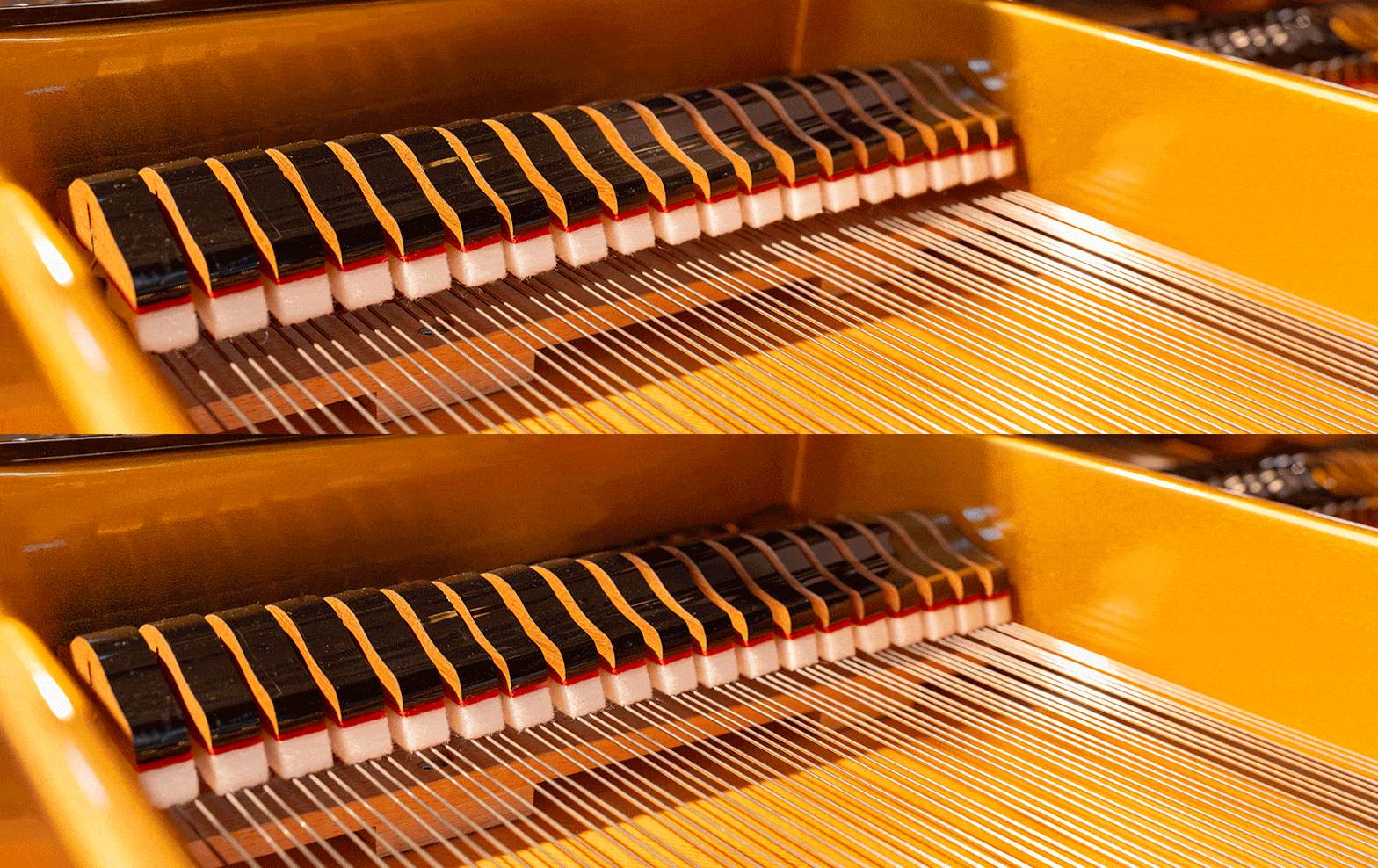
When to use the strong pedal?
- To link chords or distant notes.
- To create more emotion.
- In Lyrical or dramatic passages.

Good to know: if you play on a digital keyboard, sustain pedals are available to play more like a real acoustic piano.
The una corda or Soft pedal (left) – to soften the sound
On a grand piano, this pedal shifts the entire keyboard slightly to the right. As a result, the Hammers, which normally strike three strings (for one note), now strike only two. Hence its Italian name: una corda = “one string”.
Sound effect?
The sound becomes softer, more hushed, sometimes more intimate.
On an Upright piano?
The system is different: the Pedal advances the action and the Hammers are brought closer to the strings to reduce their travel. The result is similar: a softer sound, but with a little less subtlety than on a grand piano.
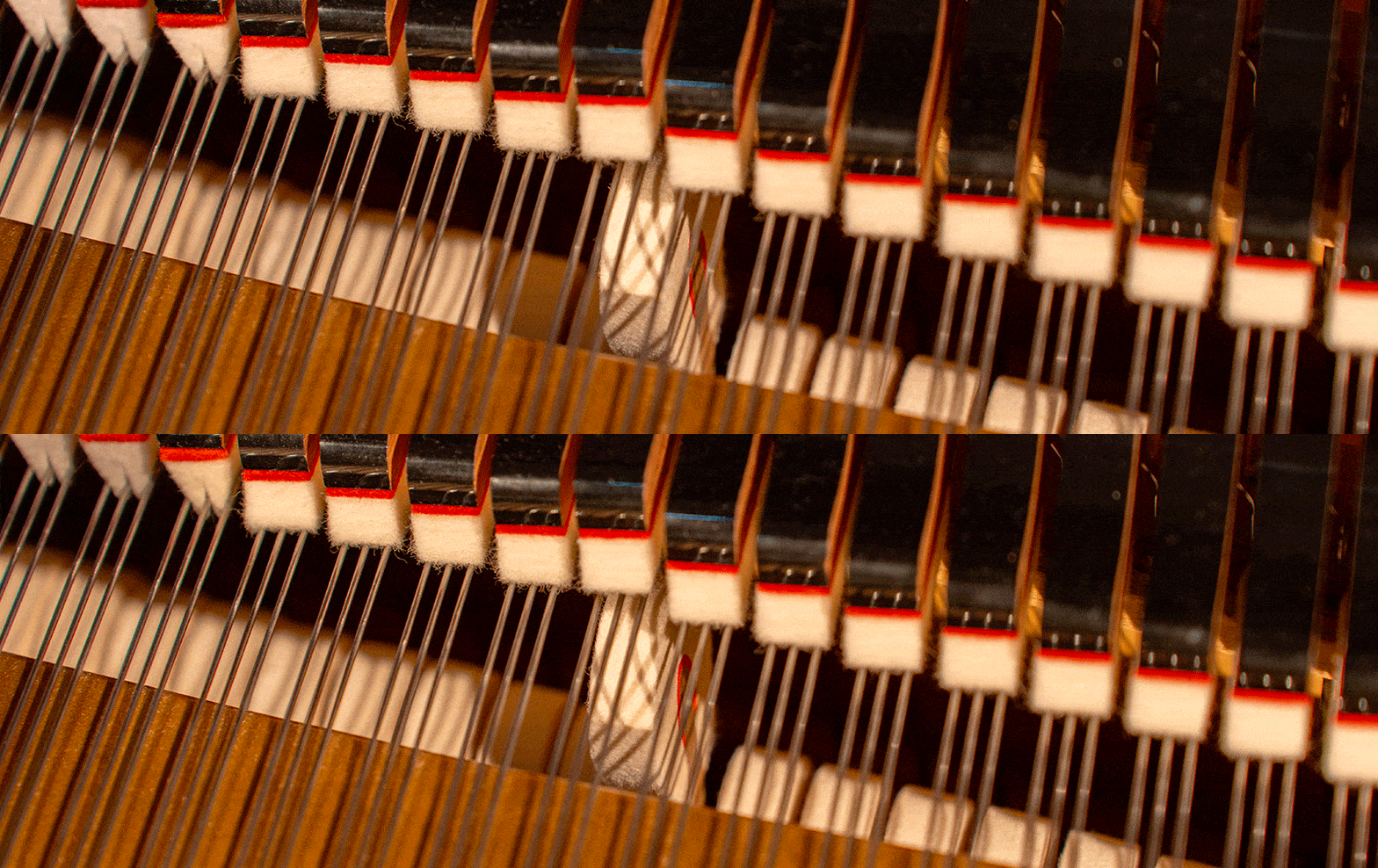
When to use it?
- To play delicate or mysterious passages.
- To play certain Dynamic or Pianissimo nuances.
- In impressionist or modern works.
The tonal pedal (center) – The most mysterious of all
Also known as sostenuto, this pedal is often unknown.
What does it actually do?
It allows you to sustain only certain notes, while playing others without prolongation. In practice, it holds the dampers only of the notes played when the pedal is depressed. Notes played after the pedal is depressed sound normal, without any particular modification.
Why?
It allows you to maintain a low chord while freely playing melodies above it, without making everything sound resonant.

On all pianos, really?
This pedal can be found on all modern grand pianos, as well as on certain high-end upright pianos or on request from certain manufacturers.
On some Upright pianos, the middle pedal may be different:
- Either a Mute Pedal (a strip of felt is inserted between the Hammers and Strings, and reduces the volume le Sound volume).
- Or a Silent Pedal (a bar slides in front of the Hammers to block them just before they strike the string, so it’s possible to play in silence).
In conclusion
Piano pedals are not mere gadgets: they are essential tools for enriching your musical interpretation. Understanding their role allows you to explore a wider palette of sounds, bring more emotion to your playing, and achieve a higher level of expressivity.So, next time you sit down at the piano, don’t forget your Feet: they have things to say too 🎶
At Boullard Musique we have many Acoustic pianos in stock and in our store. Don’t hesitate to come to our store in Morges to try them out and receive advice from our specialist.
Acoustic pianos