


🎯 IN BRIEF
- Maintain a hygrometry between 45% and 55% with a hygrometer to preserve the wood of your Guitar.
- Moisture problems are never covered by the manufacturer’s warranty.
- Wipe your strings after each use and clean the Fingerboard and frets every 6 months.
- Have your Guitar checked at least once a year by our repair workshop for optimum maintenance.
Discover 3 essential points that will make your Guitar last over time, and keep that incredible playability just like the first day!
Control humidity to preserve your guitar’s wood
Why is humidity a critical factor for guitars?
Wood is what makes up the majority of your musical instrument. After being cut, the tree contains around 50% humidity. It is either naturally or artificially dried. Certainly, guitar makers seek to source lutherie woods that are as moisture-free as possible. It is estimated that wood used in lutherie contains only 5% water! Now, wood is certainly becoming scarcer, and in a context of industrialization, woods that are very dry and not subject to warping over time, well that’s becoming rare!
How to measure and adjust moisture content?
The Key is to keep your instrument in an environment with an ambient humidity of between 40% and 60%, with an ideal range between 45% and 55%.
The first thing to do is to measure the humidity level of the room in which you store your instruments. To do this, you can use a hygrometer, a small device that measures the humidity level in a room:
Once you know the humidity level, and it needs to be corrected, you can do so with devices and accessories to correct this level in a very small space like your instrument’s case, or more globally, like the room where your guitar is stored.
Recommended accessories for stabilizing humidity levels
To correct the humidity level in a room, you can use humidifiers for air that’s too dry, or dehumidifiers for a room that’s too humid.
- Dehumidifier for rooms up to 30m2
- Dehumidifier for rooms up to 40m2
- Dehumidifier for rooms up to 100m2
For faster, cheaper or occasional correction, you can opt for humidity correction in a small space, such as a display case or instrument case, using sponge, to humidify the air, or charcoal, to dehumidify.
You can also stabilize humidity levels with a gel placed in microfiber cloth bags that you install directly in your instrument’s resonance box, or in the case/chest where it’s stored. It gives off a stable humidity level of 45% to 50%.
⚠️ ATTENTION: Humidity problems are generally never covered by warranty!
Replace strings regularly and clean your instrument
Why change your strings frequently?
To maintain the playability and intonation of your instrument, it’s essential to replace your strings regularly. Strings oxidize rapidly in contact with air and fingers. This phenomenon will be greatly accentuated if the player sweats acid.
How do I clean my strings, Fingerboard and frets?
To delay the oxidation process, we recommend wiping your strings with a cloth and a specific product after each intensive use of your Guitar: Music Nomad cloth.
You can also clean the Fingerboard and frets every 6 months using dedicated products:
- Dunlop Fingerboard 01 cleaner & prep 118ml
- Music Nomad MN105 Fretboard F-ONE Oil
- Music Nomad MN124 Fretboard polishing kit
Next, we apply a specific oil to nourish the fingerboard, with the exception of maple fingerboard, which is very often varnished. For this, you can use Music Nomad MN105 Fretboard F-ONE Oil.
Choosing the right string tension and its effect on tuning
Next, we apply the same tension (reference diameter) of the original strings. Particular attention should be paid to each change of string tension, as each modification requires a new adjustment of the instrument. This will affect neck tension, curvature, tuning and the headstock nut. For Electric guitars with vibrato, the change will be all the more obvious.
A little useful information: there are coated strings that last much longer. We can mention the Elixir brand or, more recently, D’Addario XS.
Useful accessories for changing strings
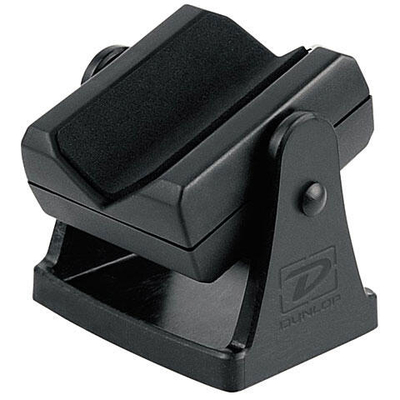
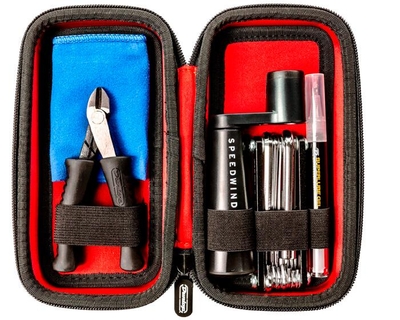
We’ve also put together a short list of accessories and kits to help you replace your strings more comfortably and efficiently.

Cleaning and protecting your guitar’s varnish
Which cloth and products to use depending on the type of varnish?
The third point, to protect the aesthetics of your Guitar, is to use the right cleaning products, so as not to see your varnish altered, sticky or even pierced.
To achieve this, it is essential to use a microfiber cloth dedicated to the care of musical instruments:
Knowing the different types of varnish: polyurethane, nitro, shellac
Varnishes fall into several categories of finish, rendering, and it is advisable to use products dedicated to each type of finish
In terms of composition, each manufacturer will use a specific type of varnish, and here too, depending on the varnish used, its thinness, fragility or robustness, it will not be treated in the same way.
We can mention :
- Polyurethane varnishes (generally thicker, easier to retouch and clean)
- Nitrocellulose varnishes (very thin, requiring more attention to cleaning and micro-scratches)
- Shellac varnishes(very fragile, used mainly on high-end classical guitars made by luthiers)
Why have your Guitar checked regularly?
In any case, it’s a good idea to have your instrument checked at least once a year by a professional.
Recommended maintenance kit for beginners
Are you embarking on the maintenance of your instrument for the first time? Then we recommend this excellent maintenance kit from Music Nomad.
And for even more advanced maintenance?
The three steps above are essential for the daily care of your Guitar. They will significantly prolong the life of your instrument and preserve its playing comfort. However, even with these best practices, some interventions require the expertise of a professional luthier.
When to call in a professional?
- Recommended annual check-up: complete inspection of general condition
- Precise adjustments: truss rod, action, intonation, tuning
- Structural problems: loose bridge, cracks, bent neck
- Refrettage: worn frets affecting playability
- Optimization: fine-tuning according to your playing style
Our lutherie workshop in Morges, integrated into our store, offers all these services with the expertise of an ITEMM-certified luthier. Jérôme, our luthier, has already serviced and repaired over 10,000 instruments since 2014. Each Guitar benefits from a free diagnosis and a transparent estimate before any intervention.