Table of contents :
How to choose the right piano? We answer all your questions to help you choose your piano: upright, grand, with Silent system, Digital piano, which brand, what budget, new or used…
The piano beaba
Let’s start with the basics: 88 notes and a heavy touch are essential for good posture and technique. I might as well say it straight away: for learning and for the long term, it’s best to go for an acoustic piano. A well-built piano is rated for up to 25 years, and in the right conditions can express your musicality for the rest of your life.
Upright piano or grand piano?
A choice based on space, sound, visual appeal and budget.
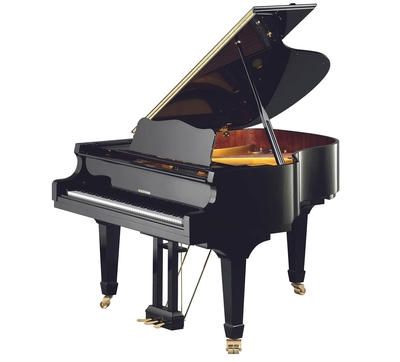
Many upright pianos are visually stunning, but the sight of a grand piano is still extraordinary.
Upright pianos have vertical strings, taking up much less space than grand pianos. But the sound and touch are different. Less powerful than a grand piano, the sound of an Upright piano is also less profound, and its mechanics are slower, except for models equipped with a double repetition system, patented by the Sauter piano factory
For the budget, entry-level models are around Chf 4,000 for an upright piano and Chf 12,000 for a grand. Good pianos come in at around Chf 9,000 for an upright and Chf 30,000 for a grand. At the very top end of the market, expect to pay Chf 30,000 for an Upright piano, and over a hundred thousand francs for a prestigious concert grand.




Digital pianos
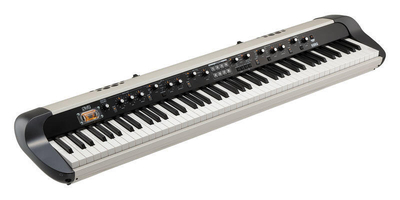
However, let’s not rule out digital Keyboards, not only for budgetary reasons, but also for reasons of uncertainty for a child starting out, space or transport. Don’t go for the smallest model – after a while, you’ll find that you’ll tire of the sounds on offer, and realize that the touch, sound response and emotional connection are still very different from an acoustic piano.
This can be de-motivating and a barrier to learning. The best models only offer a more pronounced duration before the inexorable onset of these symptoms. So reserve the use of the numeric keyboard for leisure rather than study – it’s another instrument. In short, if you want to play the piano, an electronic keyboard will only be useful for the first year(s) of initiation. Any teacher worth his salt will tell you: if you want to play the piano, nothing beats a good acoustic piano.
Piano brands
Major Japanese brands, such as Kawai, guarantee exclusive manufacturing quality, while Yamaha complies with the strictest ISO standards on working conditions, ecology and recycling, while maintaining excellent value for money.
European pianos still share the limelight with the most prestigious brands, but also excellent mid-range and top-of-the-range pianos. Understand that it’s important to rely on brands whose history and know-how are clear and beyond reproach. I particularly appreciate manufacturers that have been handed down from generation to generation, such as Petrof or Sauter.
The Silent system
Even the smallest piano can “disturb” your dear neighbors, or the people who live with you. You should know that most manufacturers now offer their pianos with an optional Silent system, enabling you to play without vibrating the strings, i.e. without “noise”, and to record yourself, or to control software on your computer – in short, to have an acoustic piano with an on-board Digital piano at your fingertips.
Invented by Yamaha in 1993, the Silent System represents an additional cost of at least eighteen hundred francs, depending on the model. Today, the vast majority of pianos are sold with a Silent System.



Yamaha Transacoustic
Still very new (2013), the name of this new generation of pianos is inspired by its principle: the soundboard is transformed into a speaker. All sounds will be able to be delivered through the vibrating part of the piano that is the Soundboard.
In practice, this means you can adjust the piano’s Sound volume! No need for headphones to play quieter… Even better, listen to an accompaniment via the Audio input while playing the acoustic piano with a hint of violins from the silent system !!! Available from Upright piano U1 and grand piano GC1.


Yamaha Disklavier
Invented in 1982, this cutting-edge technology lets your Piano play itself! Insert a cd or record your work, and the piano will replay your favorite tunes to perfection while you watch the keys and pedals move. In its current version, you can connect to the Internet to download thousands of songs, or simply subscribe to a dozen radio stations and hear your own piano playing under the fingers of the greatest Performers! Available from Upright piano U1 and grand piano GC1.


It’s always a good idea to try out a piano before you buy
Now it’s time to try out several models. Upright pianos are sized according to height, and grand pianos according to length.
For your choice: not too small or entry-level for an experienced pianist, as the instrument would not be sufficient to express all the subtleties of your playing.
Not too big either, depending on the sound power of the piano in relation to the volume of the room it’s in. With an instrument that’s too powerful, you’ll limit yourself in the strong Dynamic nuances and frustrate the expression of your pleasure.
Don’t hesitate to try out second-hand pianos. Perfect for beginners if you don’t want to invest a lot of money.
It’s even possible to find a better used piano that’s been broken in and stabilized than a new piano of lesser quality, at the same price.
You’ve identified your needs and made a small selection? All that’s left is to take the time to play, to try out several models, concentrating on the instrument’s touch and sound.
Play softly, then loudly, listening to the attack, the low, midrange and treble tones, the regularity and color of the sound… Then let one or more notes ring longer with the loud pedal, listening to the resonance and propagation of the sound.
Try a few quick strokes, feel how the mechanism reacts and whether the sound you hear corresponds to the sound you imagined. Is the Touch right for you? It will lighten slightly in its first year.
You may have noticed that when you compare two pianos of the same make and model, they sound slightly different.
This is because the vibration of the strings is amplified by a wooden soundboard, and each one is unique.
As you can see, each piano is unique, so when you find your very own, make a note of the serial number and make sure we deliver the one you’ve chosen.
As for financing, don’t forget that if you buy during a rental period, we deduct all rents already paid, and that we can offer you hire-purchase, which allows you to spread out your payment.
How to look after your piano once you’ve bought it
It’s vital for your instrument to be played regularly, so its sound will flourish, just as it’s vital for it to be tuned often.
Tuning should be carried out at least once a year.
Don’t hesitate, don’t wait, it’s the only thing to do for the good health and longevity of your instrument. In our region, for an instrument that’s always in tune, it’s advisable to tune your piano twice a year, not because it’s out of tune, but to keep it perfectly in tune!
I’d be delighted to meet you at the store to advise you on your choice of instrument. All you have to do is tell me what styles of music you’d like to play, and I’ll be able to give you lots of information about the character and quality of each instrument in our magnificent display.
Discover all our Pianos available online or in store.
Your specialist.